
Mobile imaging units — PET/CT, MRI, CT and mammography
Published:
A mobile imaging unit carries the most expensive and least forgiving equipment in mobile healthcare. A PET/CT or MRI does not tolerate vibration, temperature swings, dirty power or a floor that has started to move. High Level Enterprises builds imaging units — PET/CT, CT, MRI, mammography and ultrasound — for hospital systems, imaging providers and mobile-service companies, with the shielding, structure, power and climate control engineered around the specific scanner before the first piece of steel is cut.
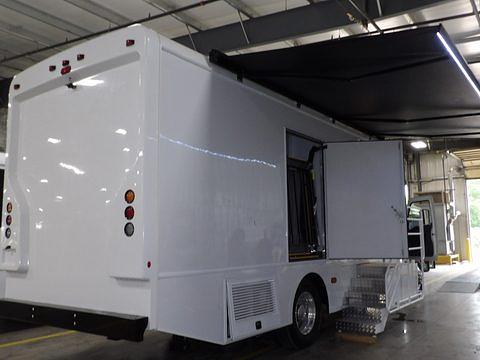
Mobile mammography unit with Hologic system: International MV, box body. Patient stairs, reception desk, Hologic mammography room.
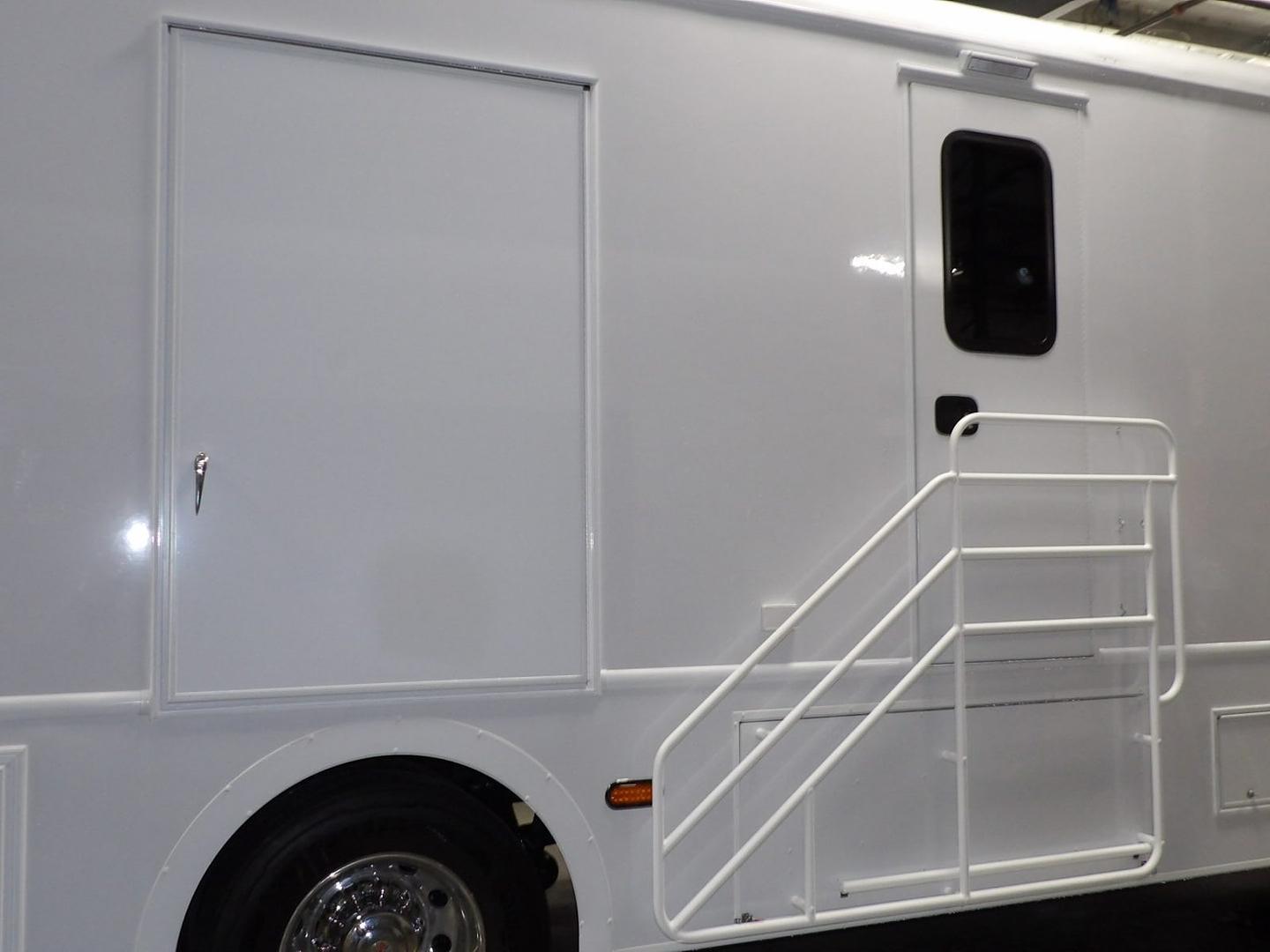
Mobile mammography unit with ducted HVAC: International MV, box body. Patient stairs, waiting bench, mammography room, ducted HVAC.
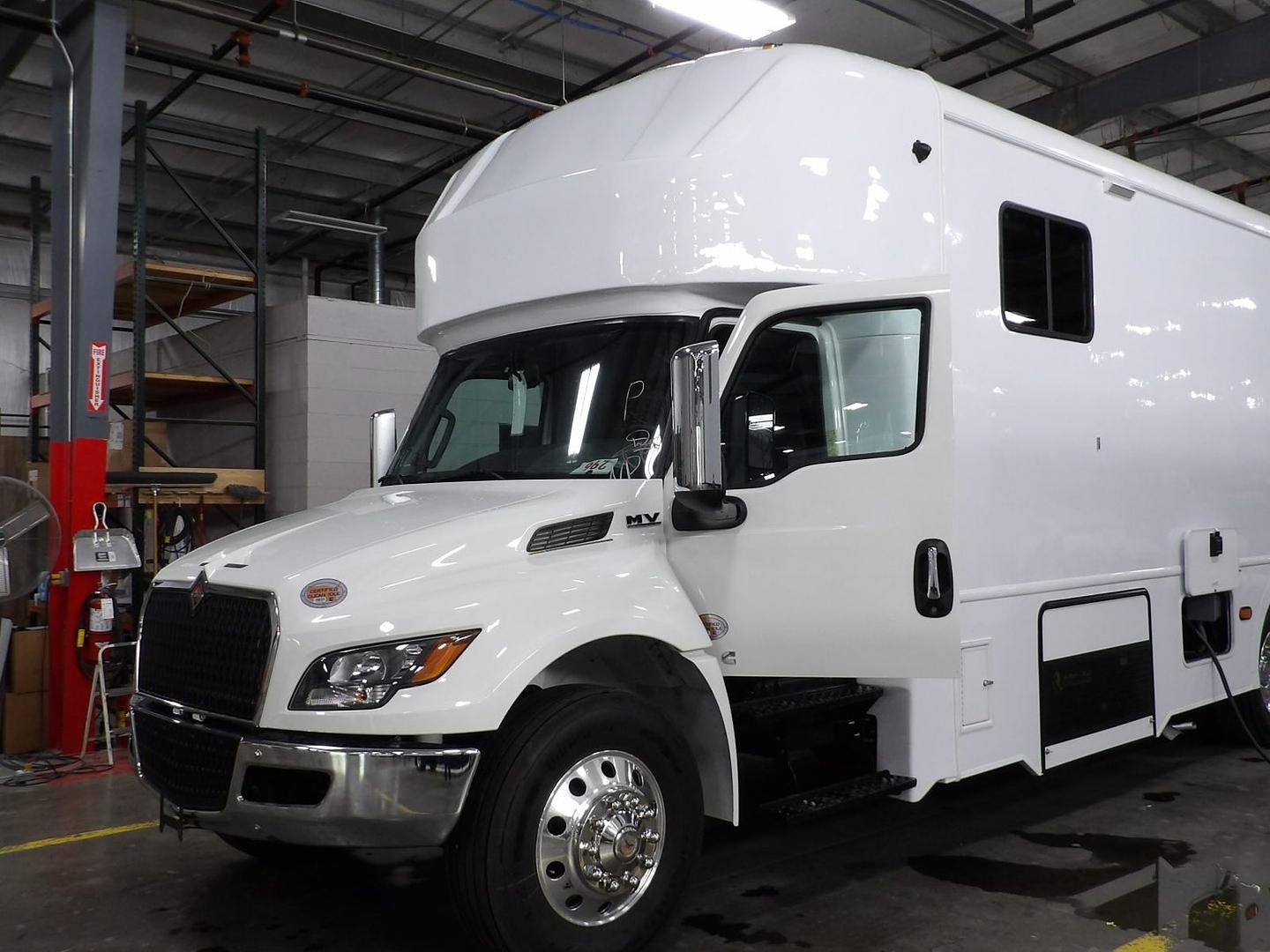
Mobile mammography unit, International MV heavy: International MV, box body.
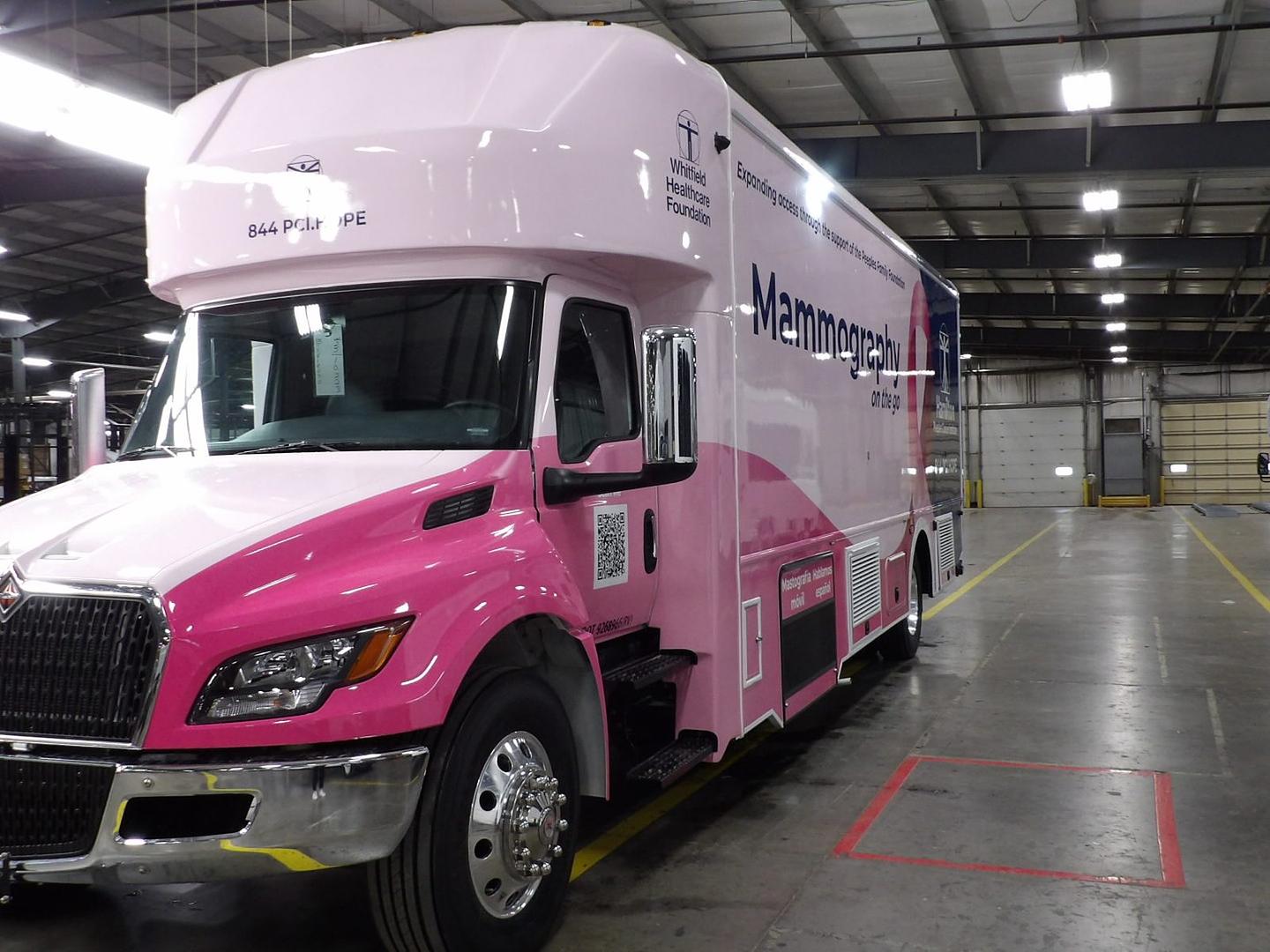
Mobile mammography unit with wheelchair lift and bilingual graphics: International MV, box body, wrapped. Patient stairs, wheelchair lift, mammography room, bilingual graphics.
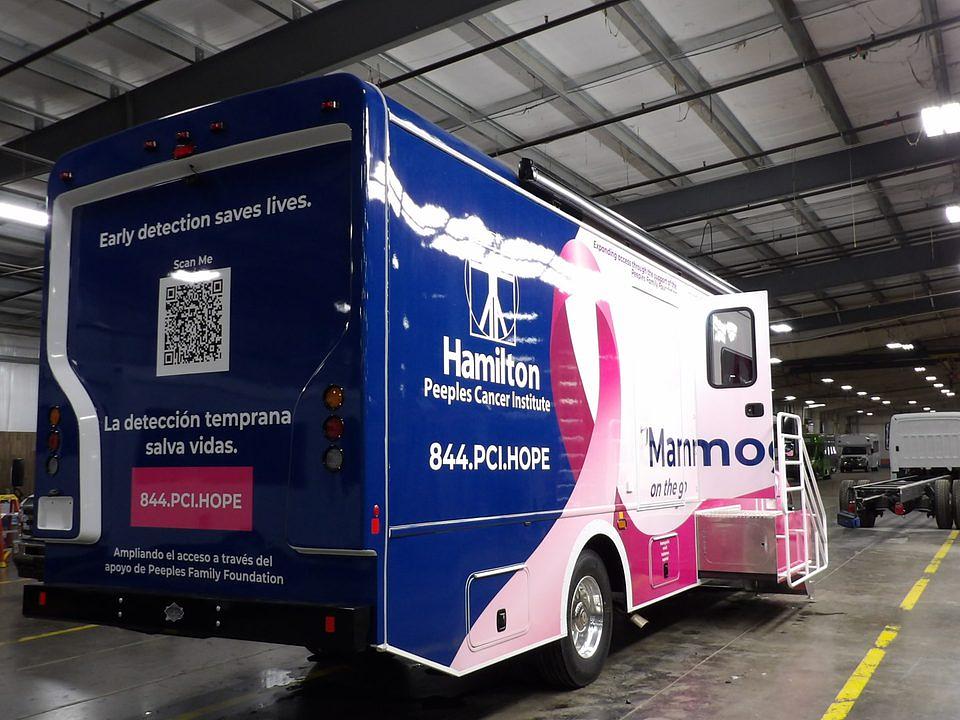
Mobile mammography unit, wrapped: International MV, box body, wrapped. Patient waiting bench, desk, mammography room.
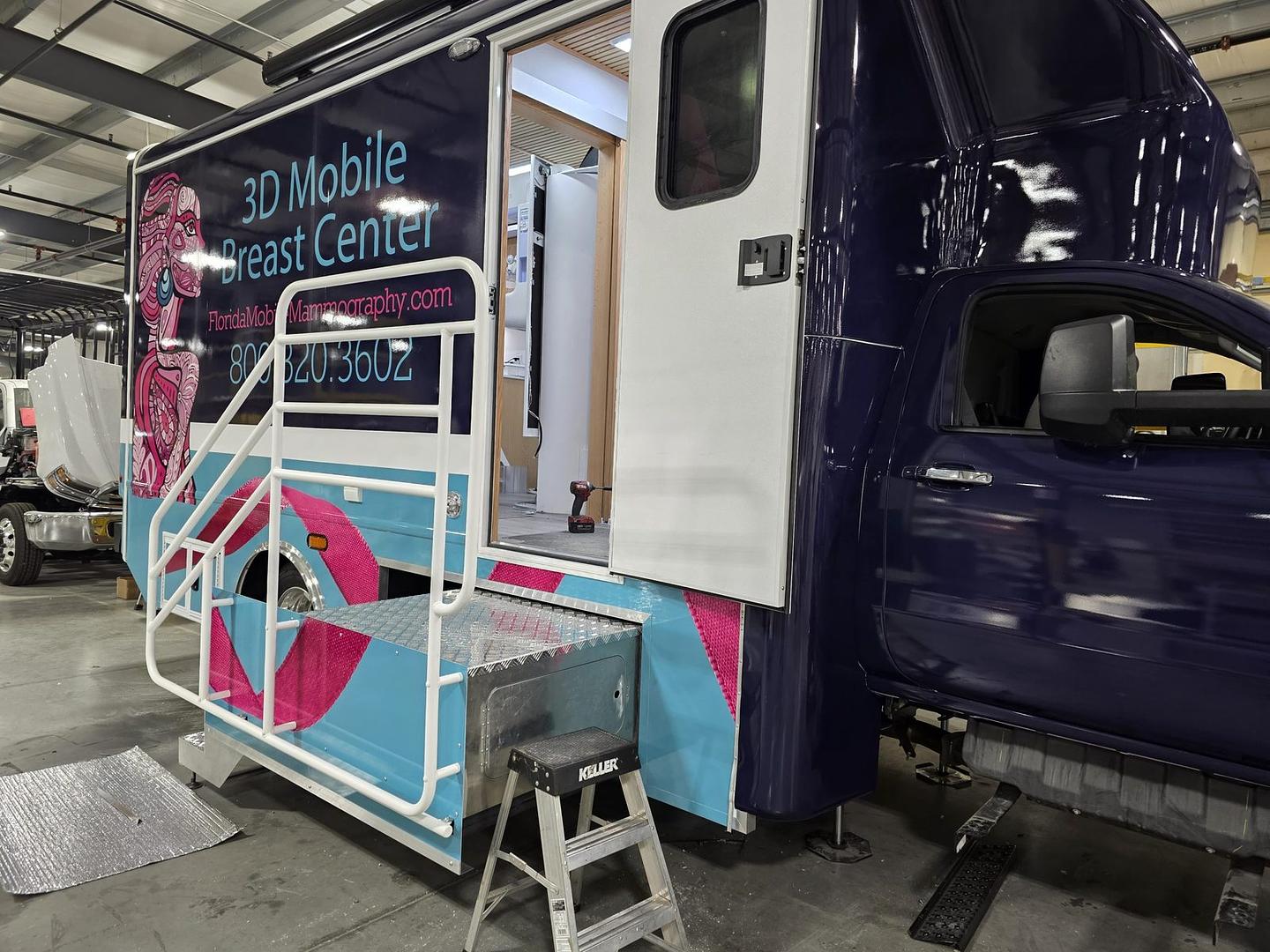
3D mammography coach: Medium-duty chassis, patient entry with handrail; mammography unit installed in the plant.
What Drives the Price
Not a tier. A size, a use and the equipment.
HLE does not build a cheap mobile imaging unit and a good one. It builds a mammography coach and an MRI trailer, on a cutaway, a medium-duty truck or a gooseneck trailer, with the equipment you bring or the equipment HLE supplies. Four things move the number; everything else is detail. Budgets depend almost entirely on the modality and the scanner package — HLE quotes the coach and integration separately from the equipment so you can see each. The proposal itemizes each driver, so you can see what moves your number.
Priced per unit.
Your number comes with the proposal.
Driver Choices Moves the range by
Platform and length Ford E-450 or F-550 cutaway for mammography and ultrasound · Ford F-650, Freightliner S2C or International MV607 medium-duty, or an HLE-built gooseneck trailer, for CT, PET/CT and MRI sets the base
Rooms and modality Shielded scan or exam room, control room with sight lines, hot lab and patient uptake area where PET/CT applies, changing area, reception, restroom per room
Major equipment The scanner, quoted separately from the coach and integration so you can see each. Lead or RF shielding to the vendor's site-planning guide; reinforced floor and mounting structure under the gantry or magnet. itemized
Access and power Generator, shore power and power conditioning sized for the scanner's real draw and inrush · HVAC sized for the equipment heat load · humidity control where the modality requires it itemized
Mobile imaging projects run on the scanner vendor's delivery date plus HLE integration time; the proposal carries a dated schedule.
Who buys a mobile imaging unit
Hospital systems and imaging providers adding capacity without building a suite, or covering several facilities with one scanner on a route.
Rural and critical-access hospitals that cannot justify a fixed scanner but can justify a shared one.
Women’s health programs running mammography routes.
Mobile imaging service companies that lease scanner time to health systems and need a coach that stays in service.
What HLE builds
PET/CT and CT coaches and trailers — lead-lined scan room, control room, hot lab where required, patient uptake area, restroom, generator and shore power.
MRI trailers — RF shielding, magnet support structure, quench venting, chiller and power provisions.
Mammography and ultrasound units — cutaway or medium-duty coaches with a shielded exam room, changing area and reception.
Multi-modality screening units — X-ray, ultrasound and lab in one unit for screening programs.
Platforms
Cutaway chassis (Ford E-450, F-550) for mammography and ultrasound; medium-duty (Ford F-650, Freightliner S2C, International MV607) and HLE-built gooseneck trailers for CT, PET/CT and MRI. The scanner’s weight, service clearances and vendor site-planning guide decide the platform, not the other way around.
Designed around the scanner
Shielding. Lead or RF shielding installed to the modality vendor’s site-planning guide and verified before interior finish goes on.
Structure. Reinforced floor and mounting structure under the gantry or magnet, engineered for the road, not just the parking pad.
Power. Generator, shore-power and power-conditioning sized for the scanner’s real draw and inrush, with clean separation between scanner and house loads.
Climate. HVAC sized for the equipment heat load, not just for people, with humidity control where the modality requires it.
Workflow. Separate patient and staff paths, a control room with sight lines, storage for injectables where a hot lab applies.
How this unit is built
The construction column for a mobile imaging unit
What HLE does, and what to ask any builder before you compare quotes.
Sidewalls
What HLE builds
One-piece pressure-laminated sidewalls with no horizontal seam. Windows cut from the panel.
What to check on any proposal
How many pieces is the sidewall, and where do the seams fall? Every seam is a future leak.
Floor
What HLE builds
Resin-infused composite subfloor over the cage; it sheds water instead of absorbing it. Seamless sheet vinyl coved up the wall where the use calls for it (medical-grade in clinical units).
What to check on any proposal
What is under the vinyl? A plywood subfloor goes soft after one winter of mopping.
Cabinetry and wet areas
What HLE builds
Solid hardwood cabinetry with stainless hardware. PerformMAX 500 resin-infused panel in wet areas, not plywood, with sealed edges. No particleboard anywhere a sink, a fridge or a mop can reach.
What to check on any proposal
Ask for the substrate by name. "Cabinets" on a spec sheet can mean particleboard that swells and fails in two to four years.
Electrical
What HLE builds
Harnesses built in HLE's own shop with marine-grade connectors, every circuit labeled at both ends, a panel drawing delivered with the unit.
What to check on any proposal
Ask for the panel drawing before delivery. If they cannot produce one, the next technician cannot either.
Funds that pay for this unit
If a grant is paying, talk to us before the application.
Whoever supplies the floor plan, spec and budget to the application writes the spec the vehicle is later bid against. The kit has all three. The tracker has the rounds.
ProgramClosesStatusOpioid settlement funds (states and counties)RollingRHTP · Missouri MIH-CP startup fundsRollingUSDA Community Facilities Direct Loan and GrantRolling
Everything the application or the bid file needs
Spec language in paste-ready paragraphs: body, materials, electrical, HVAC, compliance and testing
Compliance statements: FMVSS, ADA, Altoona, Buy America
Typical price range from recent HLE units, with the drivers that move it
Warranty terms and lead time
Vendor packet list: W-9, Buy America certificate, FTA TVM eligibility, registration IDs, references
Dimensioned plan sheets on request, not in the kit
What program directors ask first
Does HLE supply the scanner?
The scanner typically comes through your modality vendor or a refurbished-equipment supplier. HLE builds the coach or trailer to that vendor’s site-planning guide and coordinates the installation. We can quote both ways.
Coach or trailer?
A self-propelled coach moves on its own and suits multi-site routes. A trailer costs less per square foot, needs a tractor or heavy pickup and suits units that stay put for weeks at a time. Modality weight often decides it: MRI and PET/CT are usually trailers or medium-duty coaches.
Is the unit shielded and inspected?
Shielding is installed to the vendor’s specification and the physicist’s shielding report, and HLE supports the state radiation-control inspection at commissioning.
Can the unit run without shore power?
Yes. An onboard generator sized for the scanner is standard on imaging units; shore power is provided for parked operation.
How long will it last?
The vehicle is built for a service life measured in years, with the structure and subfloor engineered for that. The scanner’s own life cycle is usually the limiting factor, and many owners re-fit a new scanner into the same coach.